Jaipur doesn't reveal itself all at once. Most visitors see it through a car window — Amber Fort in the morning, City Palace by noon, a rushed photo at Hawa Mahal before lunch. That's one way to experience the Pink City. It's rarely the most memorable one.
This guide moves through Jaipur the way the city itself does — by time of day — because what's worth seeing at 6 AM is often gone by 10, and what makes the evening special hasn't even begun by lunchtime.
Morning Experiences in Jaipur
Before 7 AM, Jaipur still belongs almost entirely to the people who live there.
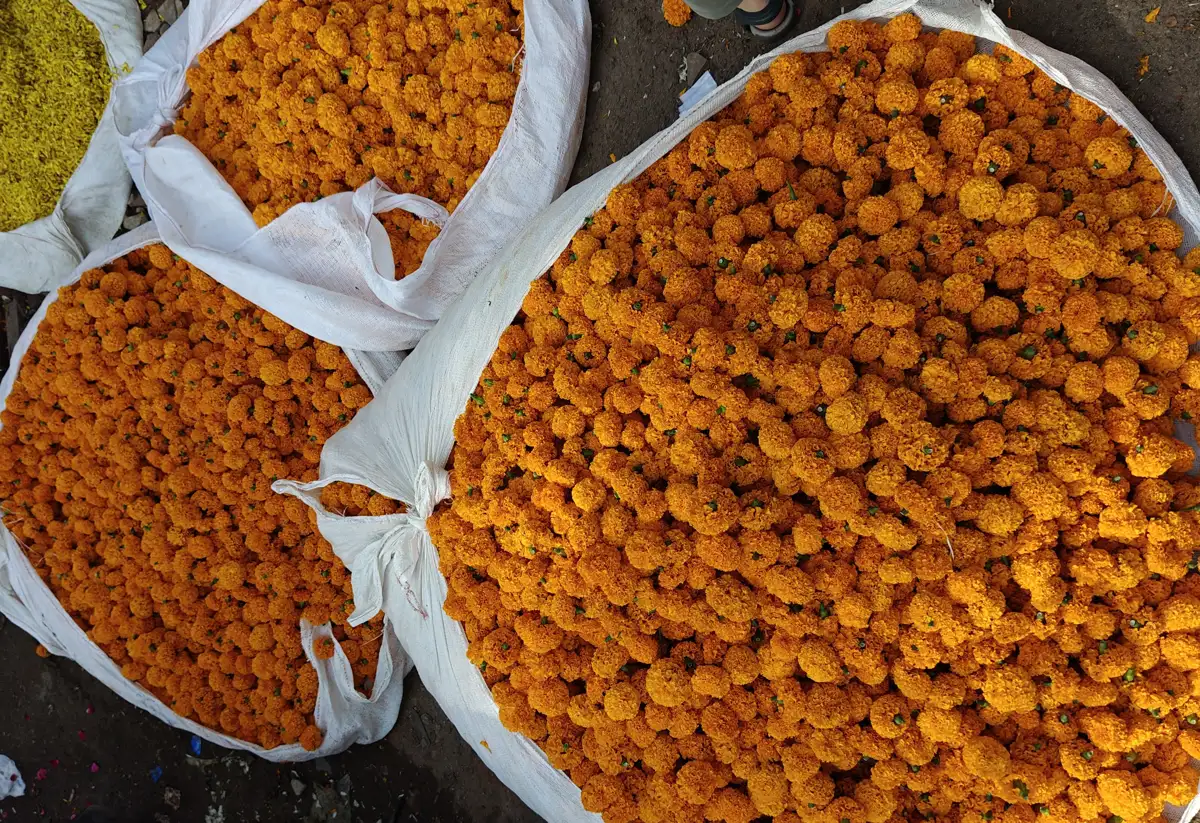
Jaipur at Dawn ($30 / ₹2,500, 2.5 hours, 5:00–7:30 AM or 8:00–10:30 AM) opens with the flower and vegetable market coming to life, followed by the milk market as countryside vendors arrive by bicycle, and the morning aarti at Govind Dev Ji Temple — one of the city's most revered shrines. We've written more about why mornings are Jaipur's best-kept secret — the walk passes Hawa Mahal just as the sun catches its façade, ending with breakfast and chai at a local eatery.
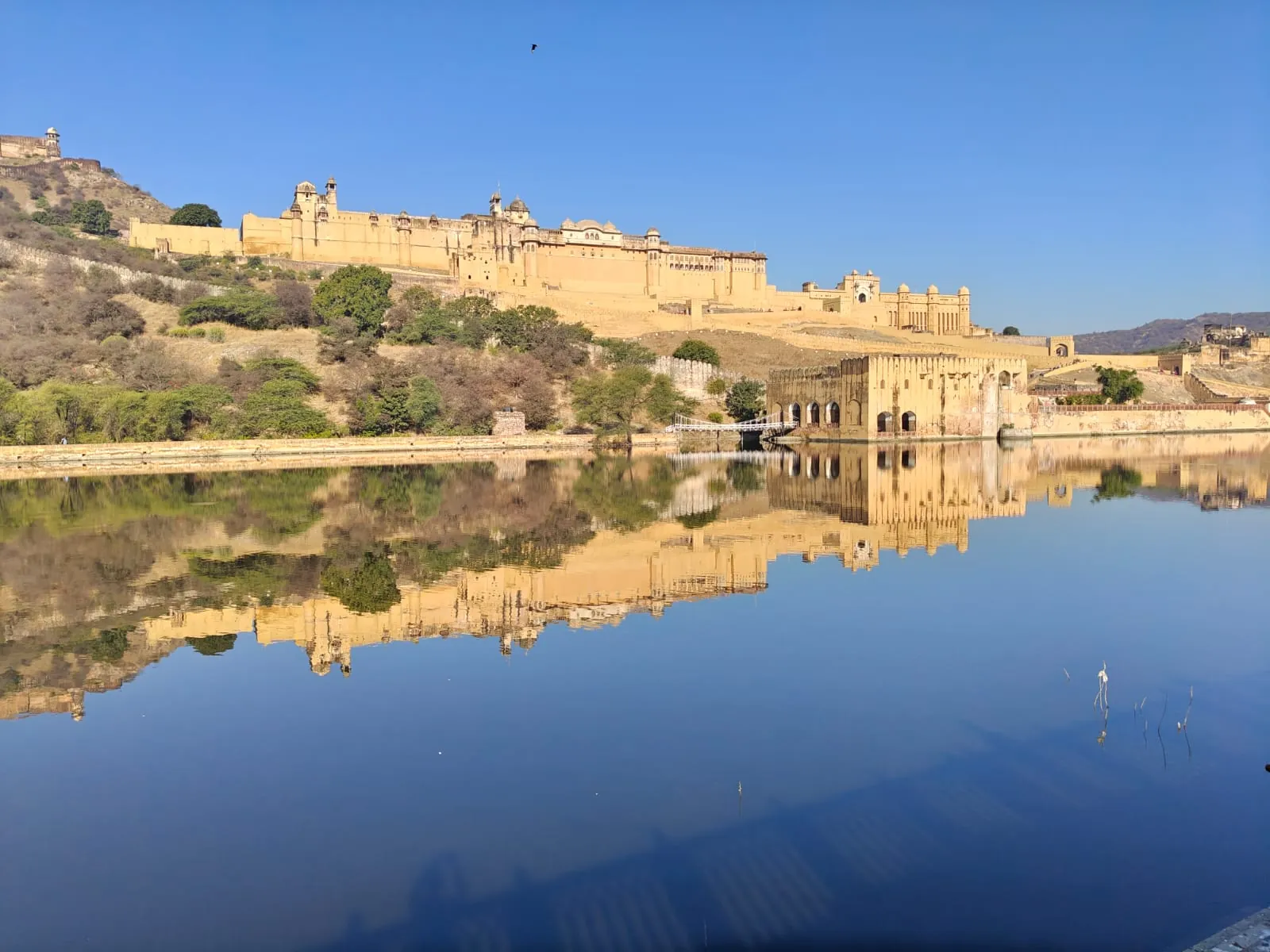
The Ridge & Ramparts ($32 / ₹2,800, 3 hours, 7:00–10:00 AM or 9:00 AM–12:00 PM, meeting at the Amber Fort View Point, Maota Lake) picks up where the old city leaves off, moving into Amber town and along the ridge connecting it to Jaigarh Fort. Along the way: the 16th-century Jagat Shiromani Temple, centuries-old stepwells that once doubled as neighborhood gathering spots, Asiatic elephants living alongside the local community, and a historic tunnel once reserved for the royal family, ending at the Jaivana cannon — the largest cannon ever built, and the reason Jaigarh was never conquered.
Afternoon Heritage & Culture Walks
Midday is when Jaipur's layers of history reward slower attention.
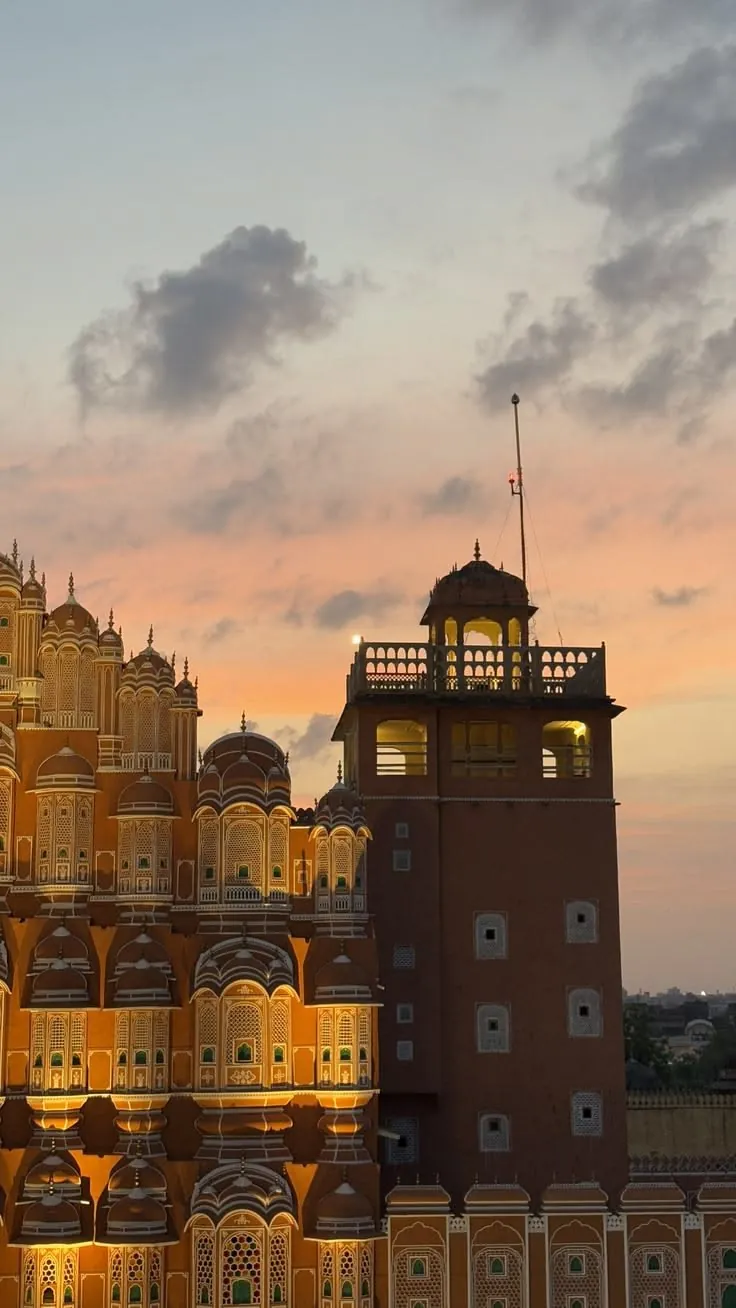
The Crown of Jaipur ($32 / ₹2,800, 2.5 hours, 10:30 AM–1:00 PM or 1:30–4:00 PM) links three of the city's most iconic landmarks — Hawa Mahal, Jantar Mantar, and City Palace — into one continuous story about Jaipur's founder, Sawai Jai Singh II. Along the way, you'll learn that Hawa Mahal's famous face is actually the back of the palace, see the Virat Samrat Yantra (the largest stone sundial in the world), and walk through City Palace's courtyards and museums before closing with a tuk-tuk ride through the everyday bustle of the old city.
The Artisan's Jaipur takes a different route entirely — into the workshops where the city's craft traditions are still practiced by hand. Block printing, brasswork and coppersmithing, gem cutting, marble carving, lac bangle making, and blue pottery are all part of this walk, with visits to family workshops that have carried these techniques across generations.
Evening & Night Experiences
As the temperature drops, Jaipur's old city shifts into its most social hours.
Beyond the Pink ($32 / ₹2,800, 3 hours, 4:00–7:00 PM) winds through the old city's bazaars and artisan lanes as shops light up for the evening — past Hawa Mahal, Tripoliya Darwaza, and Ishwari Laat, into lanes most visitors never find, like Purohit Ji Ka Katla market and Maniharon Ka Rasta, home to generations of lac bangle makers. The walk includes a curated street food trail — pani puri, kachori, jalebi, lassi, and kulfi served in clay pots.
The Blue Hour (₹7,500 for two, starting at Jal Mahal — 4:30–8:30 PM, October to March) takes a different pace entirely: an open-air jeep ride past illuminated Nahargarh Fort, Amber Fort, and the central bazaars as the city lights up after dark. It's the closest thing Jaipur offers to a nightlife tour, and on rainy evenings, the open jeeps switch to a covered roof so the experience runs regardless of season.
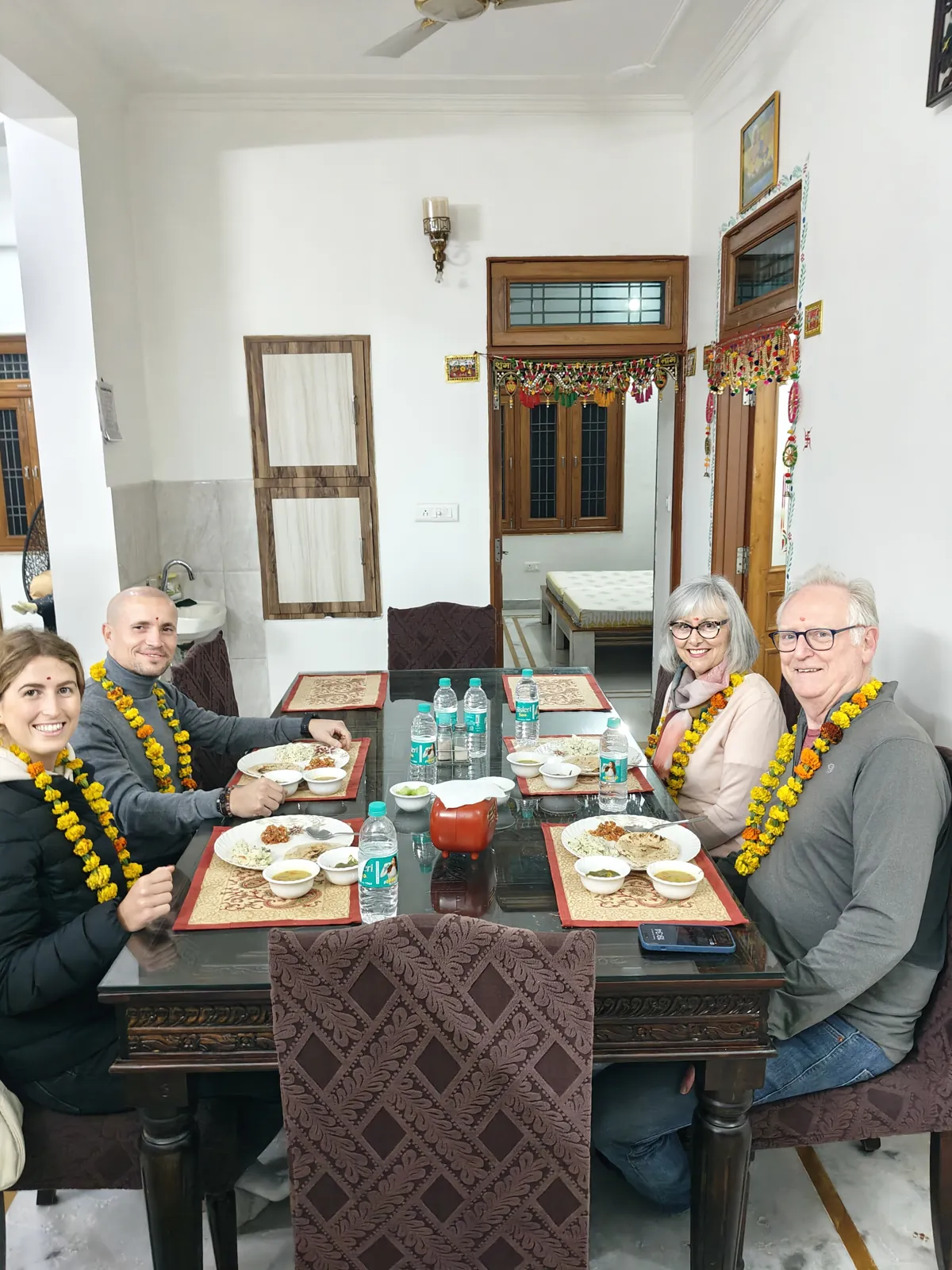
The Farm & Fire moves the food theme into the countryside. It isn't structured as a cooking class — it's closer to being welcomed into a local Hindu family's home, sharing a meal, and understanding the culture behind the food rather than just the recipe.
Off-the-Beaten-Path Jaipur
For travellers who've already covered the forts and palaces, or simply want a side of Jaipur most visitors never encounter.
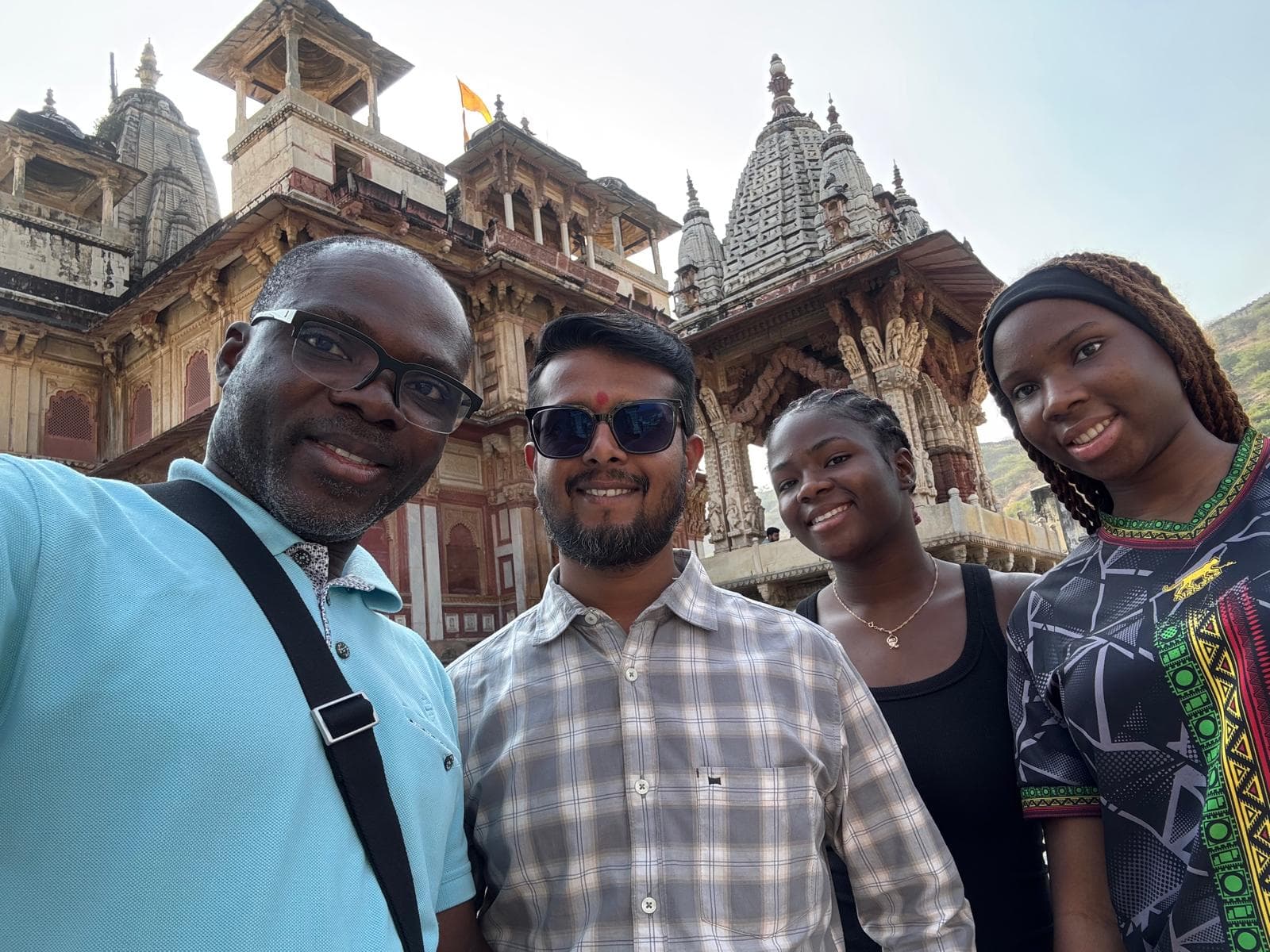
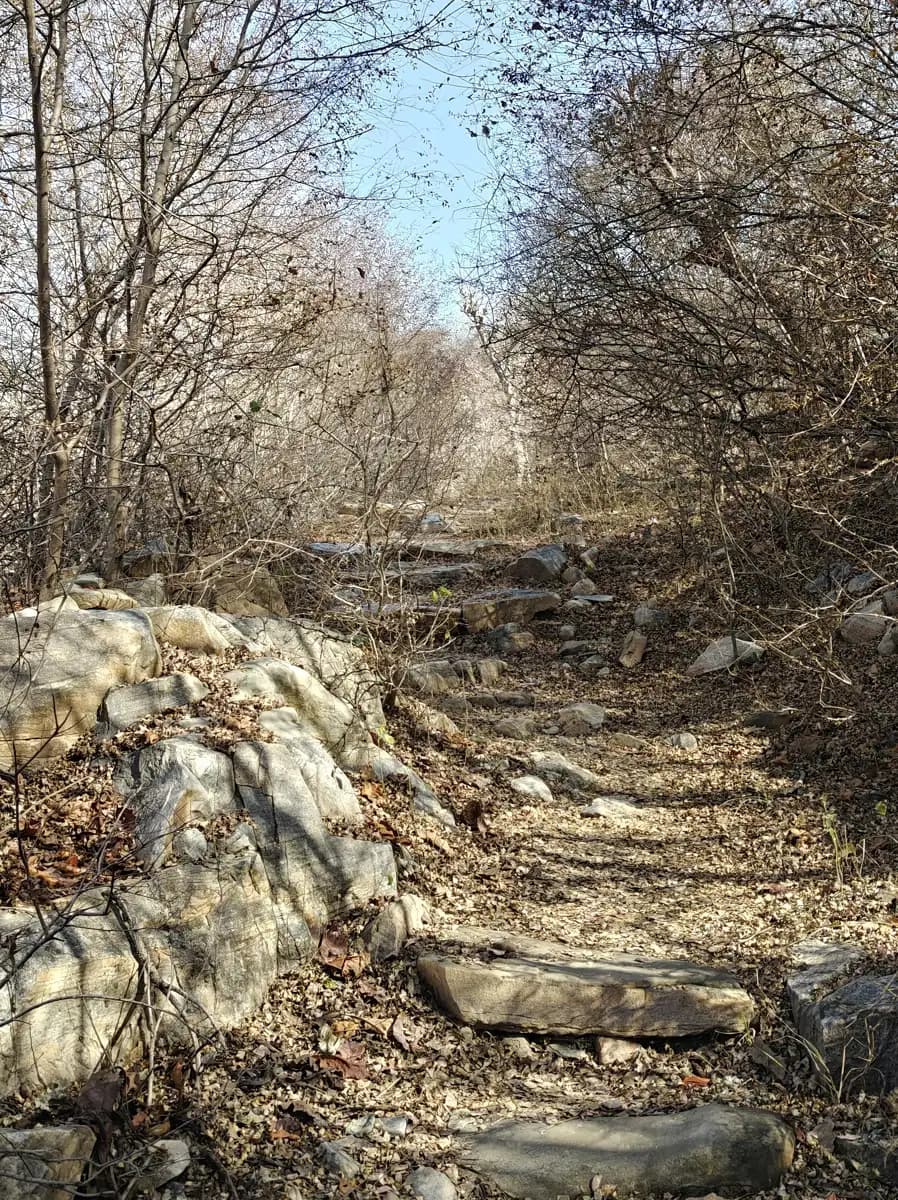
The Lost Kingdom ($40 / ₹3,500, 4.5 hours, 6:00–10:30 AM, daily on request, meeting at Kheri Gate near the Anokhi Museum) is a genuine hike, not a walking tour — through the Aravalli Hills surrounding Amber, past forgotten fortifications, a hillside shrine to Lord Hanuman, and a secluded Shiva temple, ending at a viewpoint over Amber Fort and the valley below. We go deeper into what's hidden along this route in The Hidden Temples of Amber Valley. It runs on request, with at least 48 hours' notice, to keep groups small and guide preparation thorough.
Living the Walled City approaches the old city from a different angle than Beyond the Pink — less about bazaars and food, more about the rhythm of everyday life within Jaipur's historic walls. The walk begins near the city's central heart with context on Jaipur's 18th-century layout and planning, then passes through Sireh Deori Bazaar and centuries-old temples like Kalki and Ramchandra Mandir. Along the way is the restored Sawai Man Singh townhall, once the seat of the city's local government, and lattice-carved windows that allowed royal women to watch festivals and processions from behind the wall.
Beyond the Guided Walks
Jaipur rewards independent exploring too, and there's plenty worth adding to a longer stay:
- Galta Kund — a sacred shrine tucked into a quiet valley outside the city, worth the short hike for its stillness alone
- The sound and light show at Amber Fort — a memorable way to spend an evening under an open sky
- A hand block printing workshop in Bagru — with the Chippa community, widely credited as the originators of the craft
- Chand Baori — Asia's largest stepwell, and a striking piece of architecture in its own right
- Pushkar — roughly half a day away, known for its lake and its camel fair season
- Jhalana Leopard Reserve — one of the very few places in the world where leopards can be reliably spotted in the wild, home to more than 40 leopards, including several cubs
- Ranthambore National Park — a longer day trip, for travellers hoping to spot tigers
- A quiet evening at a rooftop café overlooking the old city skyline
- Blue pottery workshops — learning technique directly from artisans who've spent years perfecting it
Best Time of Year to Visit Jaipur
Like most of Rajasthan, Jaipur is easiest to explore on foot between October and March, when daytime temperatures are milder. Summer (April–June) runs very hot, and the monsoon (July–September) brings humidity and occasional heavy rain.
That said, several experiences work well year-round. The Blue Hour runs comfortably in every season thanks to the covered-roof jeep option. Jaipur at Dawn stays enjoyable no matter the month, since mornings are consistently cooler. The Farm & Fire, being an indoor, home-based experience, is equally unaffected by the weather outside.
How Many Days Do You Need in Jaipur?
At least three days and two nights is the sweet spot for experiencing Jaipur properly. A single day can still cover one or two experiences meaningfully, and two days is enough to pair a sunrise walk like Jaipur at Dawn with an evening experience like The Blue Hour. Three days allows a complete journey across heritage, food, and nature without repeating ground.
Is Jaipur Safe for Tourists?
Yes — and increasingly, this isn't just guide reassurance, it's a measurable reputation. In Time Out's 2026 World's Happiest Cities survey, based on responses from more than 24,000 people worldwide, Jaipur was named the sixth happiest city in the world — the only Indian city to make the top 10.
On the ground, every Raah experience is led personally by a licensed guide who stays with the group throughout, with routes planned through well-populated parts of the city. Groups are capped at 8 guests, and private bookings are available for solo travellers who'd prefer a more personal setting.
What Past Guests Say
"Had a really great day on this tour with our very knowledgeable local expert Shobhit. We covered a lot of interesting and varied sights, scenes and experiences which made this Jaipur experience very memorable and remarkable." — James & Bernadette, Ireland
"I want to highlight Shobhit who was the best guide, polite, well dressed, friendly and spoke very good Spanish. The experiences that he offers in Jaipur are the best way to experience the city and have immersive experiences." — Maria Campos, México
"By the time we arrived in Jaipur, we didn't expect much more than a basic history of the main attractions. … No one had ever shared the city's history with such passion & enthusiasm the way he did." — Viktorija Satkauskienė, Lithuania
"We had a wonderful tour in Jaipur with Shobhit. He also took us to some lesser known but equally as beautiful places in Jaipur." — Diyva Mowji, USA
Ready to plan your days? Browse all Raah experiences and choose the ones that fit your trip.
Frequently Asked Questions
From Our Guests
— The Raah Journal, Jaipur