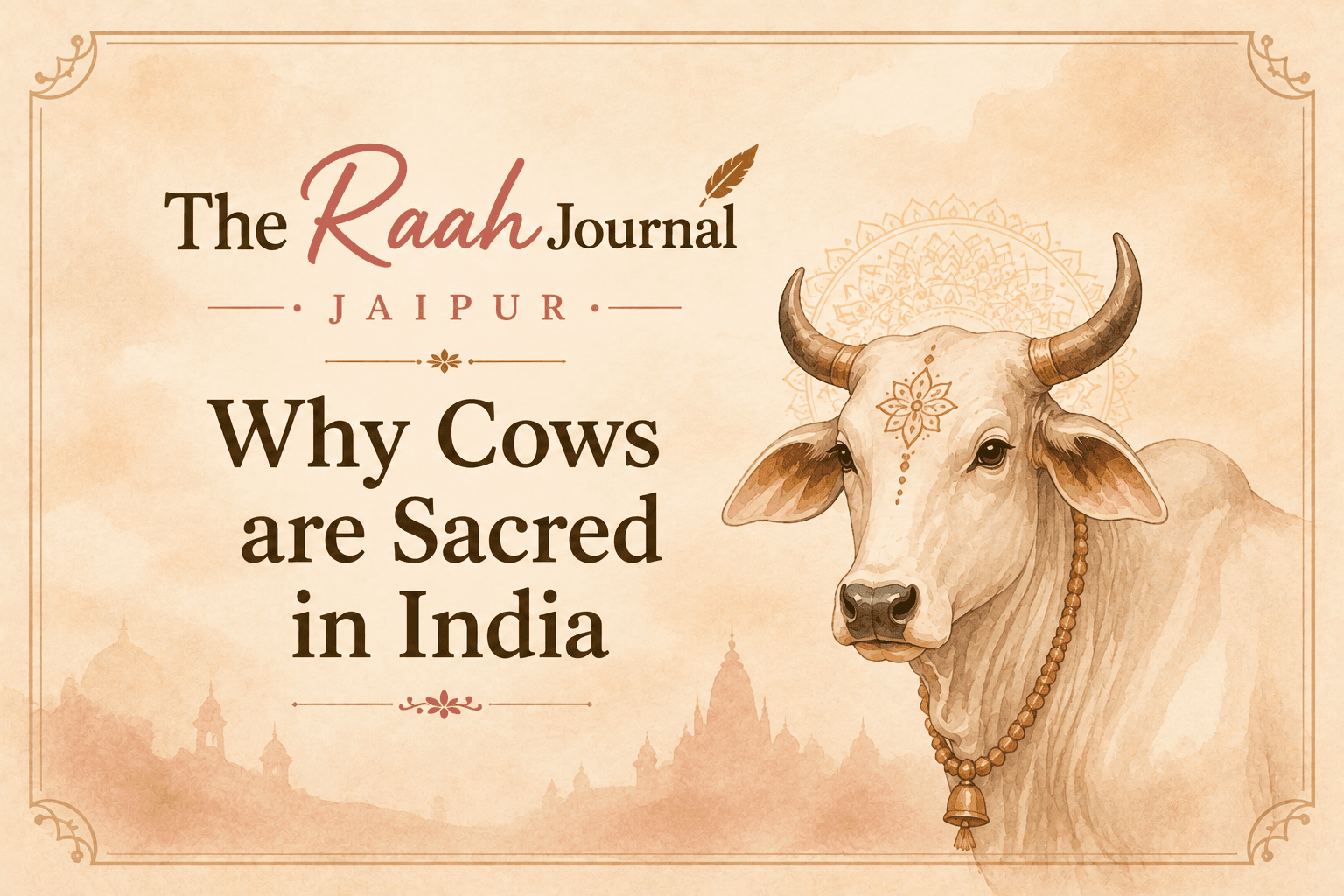
In Hinduism, the cow is highly revered and associated with a mother and the gods. It is strongly believed that all gods reside within the body of a cow. Hence, it is the responsibility of every Hindu to accord her respect — and everyone abides by this. For most religious ceremonies, the cow is essential.
As per ancient texts, cows are pure and auspicious animals. Looking after a cow and doing all the daily chores for her — like bathing, feeding, and providing water — are considered commendable acts. In fact, cow dung and urine are said to have medicinal properties. Whosoever offers a morsel of food to a cow before having a meal is said to attain salvation. With respect to this, every Hindu household prepares at least two chapatis to offer to a cow before any meal.
Besides, the charity of a cow benefits the whole family in all disciplines. The touch and care of her absolves one's sins. The produce of a cow — milk, ghee, curd, and butter — are used in religious ceremonies.
In the Atharva Veda, it is mentioned: "The cow is the mother of Rudras, daughter of the Vasus and sister of Surya. She is the producer of ghee which acts like a celestial nectar."
It is also said that cow's milk helps overcome infirmity and regain lost mental and physical health. It stimulates the intellect.
In ancient times, cows were offered to gods and given as gifts as a sign of esteem. They were considered a symbol of wealth and prosperity, and one's status would be determined by the number of cows one possessed.
In another religious text, it is said that the world depends upon the cow. The back is identical to Rig-Veda, the body of Yajur-Veda, the mouth of Sam-Veda, the neck of good deeds, and the soft body hair are like Mantras.
Hence, the cow — known as Gau-Mata — holds a revered position in Hinduism, symbolising wealth, prosperity, intellect, nutrition, and abundance. The sacred animal is linked with Hindu deities like Lord Krishna, further deepening its significance in Hindu beliefs and rituals.
To see Jaipur's temples and morning rituals first-hand, join Jaipur at Dawn, a sunrise walk through the old city.
— The Raah Journal, Jaipur