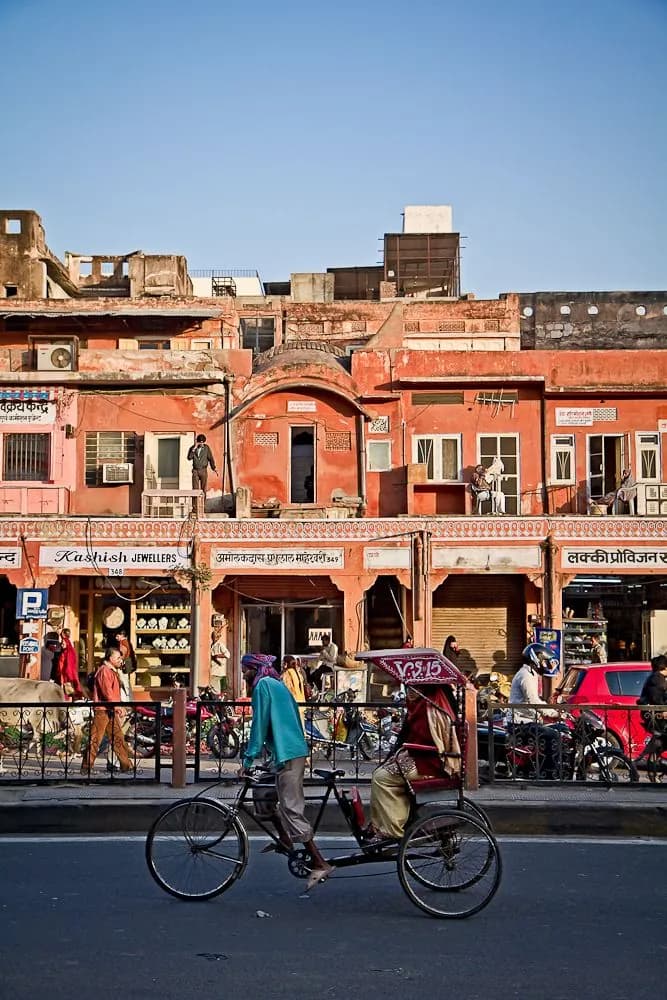
Shopping in Jaipur is part of the city's history, not a break from it. When Sawai Jai Singh II planned Jaipur in 1727, he gave whole streets to particular crafts and invited artisans from across India to settle in them. Walk through the old city today and you can still tell what a lane sells from its name.
That history is also why shopping here can feel overwhelming. There are hundreds of shops, prices are rarely written down, and some of the people who offer to "show you a good shop" are earning a commission on what you buy. I guide in Jaipur every day, and this is the advice I give guests: what is worth buying, which markets to go to, how much to pay and what to avoid.
What to buy in Jaipur
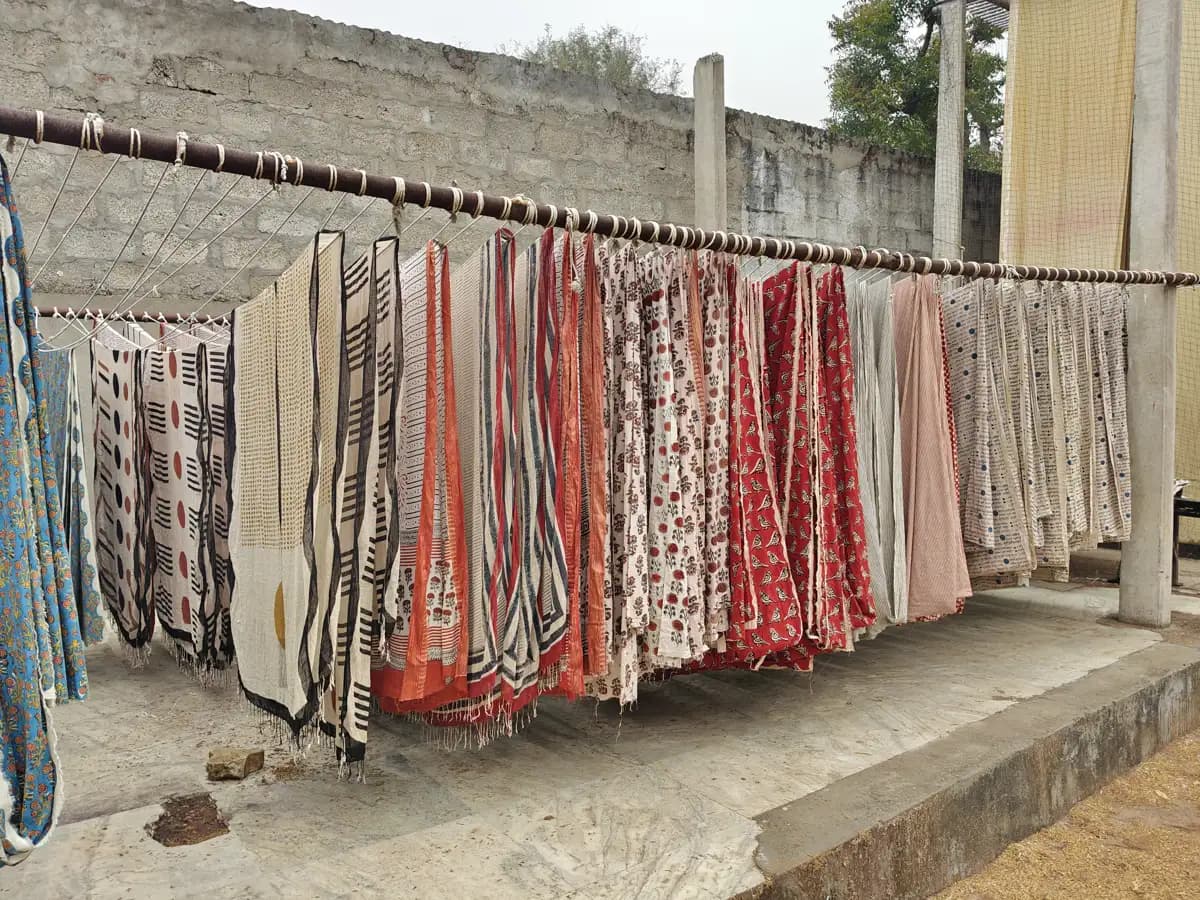
Hand block-printed textiles. This is the craft Jaipur is best known for. Patterns are stamped onto cotton by hand with carved wooden blocks, one colour at a time. Look for bedcovers, tablecloths, scarves, kurtas and quilts. Much of it is made in the printing towns of Sanganer and Bagru, just outside the city.
Blue pottery. Jaipur's blue pottery is made from quartz and glass rather than ordinary clay, and painted in cobalt blue and turquoise. Small tiles, bowls and door knobs are easy to carry home.
Lac bangles. These bright bangles are made from lac, a natural resin, and are often decorated with small stones or glass. You can watch them being shaped over a flame in the old city.
Juttis. Flat leather shoes with embroidered fronts, made for both men and women. Buy them a little snug, because the leather softens as you wear them.
Leheriya and bandhej. Tie-dyed fabrics from Rajasthan. Leheriya has wave-like stripes and bandhej has tiny dots. Both are made by hand.
Jewellery and gemstones. Jaipur is one of the world's biggest centres for cutting coloured gemstones, and it is known for kundan and meenakari (enamel) jewellery. It is also where you need to be most careful (see below).
Brass, marble and wooden crafts. Brass lamps and figurines, small marble carvings and painted wooden boxes make good gifts that last.
Rugs and carpets. Hand-knotted rugs are made in and around Jaipur. They are a serious purchase, so take your time and compare.
The best markets of Jaipur
Most of Jaipur's markets are inside the walled city and close to each other, so you can see several in one afternoon.
Johari Bazaar. The jewellers' market, with gold, silver, gemstones and kundan work, along with textile shops. Busy and colourful, and worth seeing even if you don't buy anything.
Bapu Bazaar. The easiest market for first-time visitors. Textiles, juttis, block-printed clothes and souvenirs at reasonable prices. A good place to practise bargaining.
Nehru Bazaar. Next to Bapu Bazaar, with more textiles and juttis.
Tripolia Bazaar. Brass, ironware and household goods. Lac bangles are made in Maniharon ka Rasta, a lane off Tripolia.
Chandpole Bazaar and Khajane Walon ka Rasta. Stone and marble carving. You can watch carvers at work on idols and figures.
Kishanpole Bazaar. Textiles and everyday shopping, with fewer tourists.
The old city is laid out on a grid, so the main bazaars run in straight lines and meet at large squares called chaupars. It is easier to find your way than it looks.
If you would rather not bargain at all, Rajasthali, the government emporium on MI Road, sells crafts from across Rajasthan at fixed prices. It is also a useful place to check what things should cost before you shop in the bazaars.
How to bargain in a Jaipur market
Bargaining is normal in the bazaars, and nobody will be offended if you do it politely. A few rules I share with guests:
- Know the price first. Ask in two or three shops before you buy, or check prices at a fixed-price shop.
- Start lower, but not insultingly low. Make an offer, then meet somewhere in the middle.
- Smile and stay relaxed. It is a conversation, not a fight.
- Be ready to walk away. The best price often comes as you are leaving.
- Don't bargain for something you don't want. Once you agree a price, it is polite to buy.
Shops with printed price tags, emporiums and most cafés have fixed prices.
How to avoid shopping scams in Jaipur
Most shopkeepers in Jaipur are honest, but a few scams target visitors, and it helps to know them.
The gem resale scam. Someone friendly, sometimes another traveller, tells you that you can buy gems in Jaipur and sell them for a big profit at home. You can't. If anyone suggests buying stones to resell abroad, or carrying them for someone else, walk away. Buy gemstones only if you want to keep them, and ask for a certificate from a recognised gem testing lab.
Commission shops. Some drivers, touts and guides take you to shops that pay them a commission on whatever you spend, and the price you pay includes it. If someone insists on taking you to "their friend's shop", or to a "government shop" that doesn't look like one, be cautious.
"Pure silk" and "antique" claims. Much of what is sold as pure silk or antique is neither. Pay what the item is worth to you, not what the label says.
Shipping home. Many shops offer to ship your purchases. Get a written receipt that lists exactly what you bought, the price and the shipping cost, and pay by card where you can.
Our guide to whether Jaipur is safe for tourists covers other common scams too.
When to go shopping in Jaipur
The bazaars come alive in the late afternoon and evening, when the heat drops and locals come out to shop. Mornings are quieter, and some shops in the old city open later in the day. The markets stay open on Sundays, but most shopkeepers take the day off, so you will find far fewer shops open. For the widest choice, go between Monday and Saturday.
From October to March the weather is comfortable for walking between bazaars. In summer, shop after 5 PM. Our guide to the best time to visit Jaipur has the full picture, month by month.
Shopping in Jaipur with a guide
At Raah, we never take guests to commission shops. Our walks go where the story goes, not where a shop pays us to.
Two of our walks pass through Johari Bazaar and Bapu Bazaar. The Artisan's Jaipur takes you into the old city's craft lanes to watch lac bangle makers, marble carvers, jewellers and utensil makers at work. If you want to try hand block printing yourself, we can book a session at a printing workshop outside the old city, for extra time and cost. Beyond the Pink is an evening walk through the bazaars, with lac bangle workshops and street food along the way.
Planning your budget? Our Jaipur trip cost guide shows what to expect to spend.
Frequently Asked Questions
From Our Guests
— The Raah Journal, Jaipur